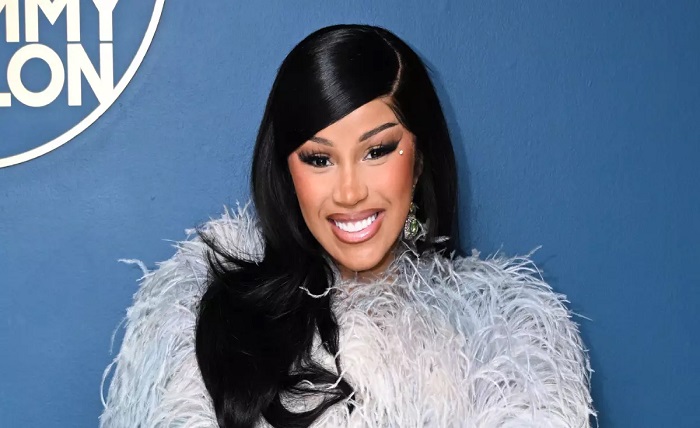
Cardi B’s Financial Empire: Every Income Stream Powering Her Fortune
Most artists make their money from music, then lose a large chunk of it to labels, managers, and production budgets. Cardi B figured out early that music is the launchpad, not the destination. By the time she released Invasion of Privacyin 2018, she was already building the scaffolding of something much bigger. In 2026, with her first full arena headline tour in six years underway and a fashion and beauty brand partnership with one of the largest retail groups in the country, the financial picture looks very different from the one most fans imagine.
This isn’t a story about a rapper who got rich. It’s a story about a woman who used a rap career to buy herself into industries with far higher margins.
The Tour Machine: What Arena Runs Actually Pay
Cardi B’s 2026 arena tour is her first major headline run since 2019. That gap matters more than people realize. In the live music economy, absence creates demand, and demand dictates ticket prices. Her Moda Center date in Portland, Oregon sold out months ahead of the show. That’s not an anomaly. It’s a pattern repeated across virtually every stop.
Arena-level headliners at Cardi’s profile typically gross between $2 million and $4.5 million per night on a sold-out run, before accounting for production costs and management fees. A 30-city tour at even the conservative end of that range puts gross receipts north of $60 million. What she takes home depends on the deal structure, but artists at her level routinely negotiate a revenue split that keeps 60 to 70 percent on their side after the promoter’s cut.
There’s a secondary economy that runs alongside every arena tour. Merchandise. Cardi’s merch operation at Portland’s Moda Center reportedly moved faster than staff could restock it in the first hour of doors. Merch at major shows pulls $25 to $50 per head on a good night. An arena holding 19,000 people does the math for you.
Tours are also, critically, not just income. They are brand activations. Every stop generates local press, social media content, and sponsor visibility that compounds across the rest of the year.
Endorsements: The Quiet Revenue Layer
Endorsement income is where artists with mass cultural appeal can genuinely decoupled their earnings from their release schedule. Cardi B has been exceptionally good at this.
She’s held partnerships with Reebok, Fashion Nova, Balenciaga, and Pepsi over the years. Each deal works differently. Some are flat fees, some include royalty structures tied to product sales, and the top-tier luxury arrangements often carry equity provisions. Reebok, for instance, built an entire Cardi B sub-line that sat in its product catalog for multiple seasons.
Fashion Nova is the one that most people underestimate. The collaboration wasn’t just a one-off campaign. Fashion Nova’s CEO Richard Saghian has publicly described Cardi as one of the brand’s most effective commercial partners, with drops selling out within hours of launch. Arrangements like that, where the celebrity drives direct consumer revenue rather than just brand awareness, tend to command seven-figure annual contracts at minimum.
The aggregate? Industry estimates for Cardi B’s annual endorsement income have consistently landed in the $10 million to $20 million range across her peak active years. That figure doesn’t crater much during a quiet album cycle because her social media following. Over 175 million on Instagram alone as of mid-2026. Keeps her commercial value high regardless of whether new music is out.
The Whipshots Play: From Endorser to Owner
In late 2021, Cardi didn’t just partner with a spirits brand. She co-founded one. Whipshots, a vodka-infused whipped cream product, launched through Starco Brands and sold out its entire initial inventory within hours. Rolling Stone documented her hands-on role in developing flavors and creative direction, a detail that matters because it signals genuine ownership involvement rather than a licensing arrangement where a celebrity lends their name and collects a flat fee.
Ownership changes the economics entirely. An endorser gets paid when the contract says they get paid. An owner gets paid when the business grows. Whipshots expanded its distribution across multiple states through 2022 and 2023, and the brand has continued adding seasonal SKUs. Cardi holds an equity stake. What that stake is worth depends on the company’s valuation, but the structure means she participates in upside that a traditional deal would never offer her.
This is the part of the Cardi B wealth story that gets skipped in most profiles. The shift from endorser to equity holder is the single biggest financial decision any celebrity can make.
Fashion and Beauty: The Revolve Joint Venture
In early 2026, Cardi B and Revolve Group announced an exclusive joint venture to build a fashion and beauty brand rooted in her Bronx identity and Caribbean heritage. This isn’t a collab drop. It’s a co-owned brand built inside one of the most effective digital fashion retail engines in the industry. WWD reported on the Revolve partnership as a landmark deal that positioned Cardi not as a brand ambassador, but as a founding equity partner with a stated goal of building a billion-dollar lifestyle company.
Revolve generated $1.3 billion in net revenue in 2023. Their influencer-to-consumer model is one of the most refined in fashion retail. Pairing that infrastructure with Cardi’s cultural reach and her existing fashion credibility is not a celebrity vanity project. It’s a serious commercial bet with serious commercial mechanics.
For comparison, consider what happened when Rihanna built Fenty Beauty inside the LVMH ecosystem. The brand hit $600 million in revenue in its first year. The structural parallel isn’t perfect, but the principle is identical: a celebrity with genuine cultural capital plus institutional retail infrastructure equals something much larger than a solo brand could achieve.
Cardi’s been direct about her ambitions. “I want generational wealth,” she’s said in multiple interviews. The Revolve deal is the clearest expression of that goal in her portfolio.
How Local Media Tracks the Economic Ripple
One of the less-discussed dimensions of a major artist’s touring income is what it generates for the cities that host the shows. Portland is a useful case study. When Cardi played the Moda Center in 2026, the economic activity didn’t begin or end at the venue doors. Hotel bookings spike. Restaurant reservations jump. Local transport, parking, and fan merchandise outside the venue all capture a slice of the money that flows into a city behind a sold-out arena run.
Regional entertainment press has become increasingly sophisticated at tracking this. Outlets like Willamette Week have published detailed breakdowns of how major concert runs reshape local venue revenues and fan spending habits in the Pacific Northwest. This kind of coverage matters because it contextualizes what an artist’s tour is actually worth at ground level. Not just to the artist and promoter, but to the broader local economy that absorbs the spending.
For someone like Cardi, whose fanbase skews young and is willing to travel across state lines for a sold-out show, the economic footprint per date is proportionally larger than most analysts account for when citing gross tour revenue.
Gambling involves risk. Play responsibly and only wager what you can afford to lose. If gambling is becoming a problem, visit BeGambleAware.org.
Acting and Media: The Diversification Nobody Fully Credits
Cardi B appeared in Hustlersin 2019 alongside Jennifer Lopez. The film grossed $105 million worldwide. Her performance was praised by critics who had spent years writing her off as a musician with novelty appeal. That review cycle mattered more than the acting fee.
Since then, she’s been attached to several film and television projects at various stages of development. Acting fees at her level start around $500,000 per project for supporting roles and climb sharply with billing. More importantly, a credible acting career gives a celebrity leverage in brand negotiations. A film star and a pop star command different rooms.
She also generates significant income from social media itself. Her Instagram Live sessions routinely pull millions of viewers. At her follower count and engagement rate, sponsored content deals are valued at $400,000 to $900,000 per post by influencer marketing firms that use standard engagement-weighted models. She doesn’t post sponsored content constantly, which is actually a smart move. Scarcity keeps rates high.
What the Numbers Add Up To
Here’s the honest answer: nobody outside her financial and legal team knows the precise figure. Celebrity net worth estimates are educated approximations based on public deal reporting, industry standard rates, and comparable transactions. What we can say with confidence is that the structure of Cardi B’s income is genuinely unusual for an artist her age.
Most entertainers who reach her level of fame are heavily reliant on two or three income sources. Music royalties, touring, and maybe one brand deal. Cardi has built something closer to a portfolio: touring income, streaming royalties, a six-figure-per-post social media operation, equity in a spirits brand, a joint venture fashion and beauty brand with a billion-dollar retail partner, film work, and ongoing endorsement relationships.
That structure is more resilient than it looks. If she goes quiet on music for two years, the Revolve brand still operates. Whipshots still ships. The Instagram following doesn’t disappear.
For a complete picture of her career earnings trajectory. From the early club years through the first Invasion-era deals. Height Digest’s breakdown of Cardi B’s net worth covers the earlier financial ground in detail.
The Bronx is still very much in the DNA of how she operates. But the empire she’s built in 2026 isn’t borough-sized anymore.
FAQ
What is Cardi B’s primary source of income in 2026?
Touring is her largest single income event in 2026, with her first arena headline run in six years generating substantial per-night revenue. But her endorsement portfolio, the Revolve fashion and beauty joint venture, her equity stake in Whipshots, and social media content deals collectively outpace what she earns purely from recorded music.
How does Cardi B make money from fashion?
Through two main channels. Her long-running collaboration with Fashion Nova drove consistent sales-linked revenue. Her 2026 joint venture with Revolve Group goes further. She’s a co-owner of the brand, not just a collaborator, which means she participates in the company’s financial upside as it scales.
Did Cardi B’s acting career contribute meaningfully to her net worth?
Yes, though it’s often underestimated. Her Hustlersrole alone generated a significant acting fee and meaningfully raised her commercial profile with studios and high-end brands. Acting income diversifies her earnings and increases her leverage in brand negotiations. Two things that compound over a long career.
How does the Whipshots business model differ from a typical celebrity endorsement?
A standard endorsement pays a flat or performance-linked fee for using a celebrity’s name and likeness. With Whipshots, Cardi co-founded the company and holds equity. That means she earns as the business grows, rather than collecting a fixed payment regardless of performance. It’s a fundamentally different financial relationship.
How much can a single Cardi B Instagram post earn from a brand deal?
At her follower count and engagement rate, influencer marketing firms value sponsored posts in the $400,000 to $900,000 range using standard engagement-weighted models. She posts sponsored content selectively, which keeps her audience trust high and her rates higher than artists who oversaturate their feeds with brand placements.