Have you ever wondered how tall you might grow or how tall your child might be one day? A height generator makes this guessing game much easier. A height generator uses maths and known growth patterns to give you a solid estimate in seconds. This tool has become popular with parents, students, athletes and even doctors. People want answers and a height generator delivers just that. In this article I will look at how a height generator works, why people use it and how you can get the best from it.
What Is a Height Generator?
A height generator is a tool that predicts a person’s future height. It normally asks for basic details, such as age, current height and sometimes the height of both parents. Once you enter this information it runs a calculation. Shows you an estimated adult height.
Most rely on trusted formulas used by Pediatricians for decades. These formulas are not magic. They are based on data collected from thousands of children over many years. That is why a good one can give an accurate range even if it is not a perfect prediction.
Why People Search for a Height Generator Online
Parents often want to know if their child is growing at a pace. A height generator gives them peace of mind without needing an immediate doctor visit. It also helps them plan ahead for things such as clothing sizes or sports training.
Teenagers and young adults use one out of curiosity. Growth spurts can feel random. It helps make sense of the changes happening in the body. Coaches and talent scouts in sports such as basketball or volleyball also use one to spot potential.
How Does a Height Generator Actually Work?
Most height generators use one of the well known formulas. The common one is the mid-parental height method. It averages both parents’ heights. Adjusts slightly based on the child’s gender.
Another popular method is the Khamis-Roche formula. One using this formula considers the child’s height, weight and age along with parental height. This formula tends to be more accurate for children between ages four and seventeen.
Some advanced calculators also factor in bone age, which doctors measure through an X-ray of the hand and wrist. One that includes bone age gives a picture of how much growing time a child has left. One that includes this data tends to be more precise than basic calculators.
The Science Behind Growth Prediction
Genetics plays a role in how tall someone becomes. Studies show that height is eighty percent determined by genes passed down from parents. The remaining twenty percent comes from factors such as nutrition, sleep, exercise and overall health.
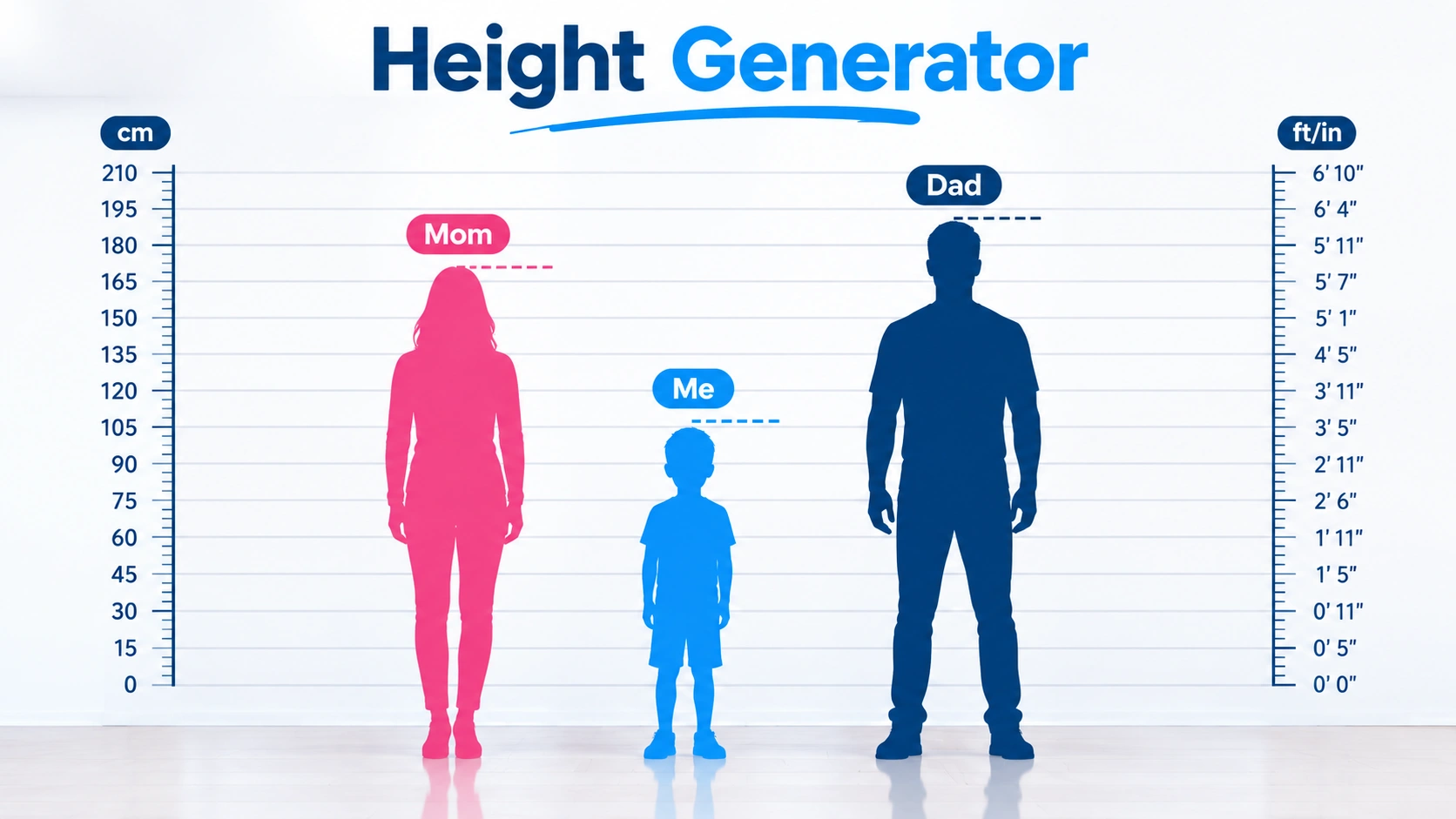
This is why a height generator asks for height in almost every case. Tall parents usually have children and short parents usually have shorter children. However exceptions happen all the time because genes can skip generations or combine in ways.
Genetics vs Environment: What Really Decides Your Height
Genetics plays the biggest role in how tall you become. Studies suggest that genes account for about 60 to 80 percent of your final height. This means tall parents often raise tall kids, and shorter parents often raise shorter kids.
But genetics is not the whole story. Environmental factors also matter a lot. Nutrition, exercise, sleep, and even health during pregnancy can push height up or down within your genetic range.
Think of your genes as setting a ceiling and a floor. Your daily habits decide where you land between those two points. This is exactly why a good prediction tool asks about lifestyle details in some cases, not just parent height alone.
Popular Methods Behind These Calculators
There are several trusted methods that a good prediction tool can pull from. Each one has its own strengths, and some are more accurate than others.
Bone Age Method
This method uses an X-ray of the hand and wrist to check bone maturity. Doctors compare the X-ray to a chart of typical bone growth patterns. It is considered one of the most accurate ways to predict height, though it requires a clinical visit.
Khamis-Roche Method
This approach looks at a child’s current height, weight, and the average height of both parents. Many online tools rely on this method because it does not need any medical scans. It tends to give solid, dependable results for children between ages 4 and 9.
Mid-Parental Height Method
This is the simplest method around. You just take the average height of both parents, then add about 2.5 inches for boys or subtract 2.5 inches for girls. It is quick, but it is also the least precise option.
CDC Growth Charts
These charts track a child’s height over time and compare it to national averages. Doctors use these charts at every checkup to see if a child is growing at a steady pace. They are not exact predictors, but they show useful growth trends.
Quick Comparison Table: Height Prediction Methods
Here is a simple breakdown to help you understand which method might work best for you.
| Method | What It Needs | Accuracy Level | Best For |
|---|---|---|---|
| Bone Age (Greulich-Pyle) | Hand and wrist X-ray | High | Kids with growth concerns |
| Khamis-Roche | Height, weight, parent height | Moderate to High | Kids ages 4 to 9 |
| Mid-Parental Height | Parent heights only | Basic | Quick estimates at home |
| CDC Growth Charts | Height history over time | Moderate | Tracking growth trends |
| Height Generator (Online Tool) | Basic personal details | Varies | Fast, casual predictions |
As you can see, each method fits a different need. An online calculator is great for a fast answer, while a doctor’s method works better for detailed health tracking.
Which Formula Should You Trust the Most?
For casual curiosity, any basic height generator will satisfy your question. But if you are a parent worried about a growth issue, choose a tool built on the Khamis-Roche formula. It pulls from more data points and tends to land closer to the actual adult height.
Doctors still recommend regular checkups alongside any online tool. No calculator can fully replace a professional’s Judgment, especially if there are concerns about slow or unusual growth. Think of a height generator as a helpful guide, not a final verdict.
Real-World Examples of Height Prediction
Imagine a boy who’s ten years old and four feet eight inches tall. This boy’s father is five feet eleven inches and this boy’s mother is five feet five inches. A height generator that uses the method might predict that this boy will reach a height of about five feet ten inches to six feet when this boy becomes an adult.
Now imagine a girl who’s 12 years old and already 5 feet 3 inches tall. The girls’ parents are both about height. A height generator might suggest that the girl is close to the girl’s height already because girls usually finish most of their growth by age 14 or 15.
These examples show why context matters much. Age, current height and gender all shape the prediction. A height generator gives you a starting point, not a locked‑in fact.
Factors That Can Change the Final Result
Nutrition plays a role in reaching the predicted height. Kids who eat protein, calcium and vitamin D tend to hit their genetic potential more easily. Poor nutrition during childhood can actually stunt the child’s growth below what the genes would allow.
Sleep matters as much as food. Growth hormone is released mostly during sleep especially in children and teens. A height generator cannot measure sleep quality so keep this in mind when reviewing the child’s results.
Health conditions can also shift the outcome in either direction. Some hormonal issues cause slower growth than expected. If the child’s actual growth strays far from the predicted range a visit to the Pediatrician is a move.
Who Benefits Most from a Height Generator?
Parents tracking a child’s development find value in these tools. Parents can spot warning signs if the child’s growth patterns look unusual compared to the prediction. This early detection sometimes leads to catching health issues before they become serious.
Athletes and coaches also rely on a height generator for long‑term planning. Basketball and volleyball coaches for example want to know which young players might grow into frames. This helps them decide which players to invest training time in.
Even adults use a height generator out of curiosity about the adults own past growth patterns. Some people simply enjoy comparing the adults height to what the formula predicted. It is a way to look back and see how close science came to reality.
Tips for Getting the Most Accurate Prediction
Always measure height without shoes and first thing in the morning. Height can actually shrink slightly throughout the day because of compression from standing and sitting. This small detail makes a difference in the final numbers.
Use the measuring method every time the child is checked for progress. Switching between walls, tools or times of day can create confusing inconsistencies. Consistency gives a clearer picture of the growth trend.
Talk to a doctor if the results ever seem alarming or confusing. A height generator is a screening tool but it cannot diagnose medical conditions. Professional advice always outweighs any calculator when health concerns arise.
Final Thoughts on Using a Height Generator
A height generator gives you a fast, friendly way to estimate future growth. It combines real science with simple maths to produce results anyone can understand. Whether you’re a curious teenager, a concerned parent, or a sports coach, this tool offers real value. Remember that no calculator is perfect. Genetics, nutrition, sleep, and health all play a part in the final outcome. Use a height generator as a helpful guide, track progress over time, and always follow up with a doctor if something feels off. At the end of the day, growth is a personal journey filled with surprises. A height generator simply helps make that journey a little less mysterious and a lot more fun to follow.
Frequently Asked Questions
Is a height generator accurate for every child?
No tool is 100 percent accurate, but a good height generator gets close for most children. Genetics and health factors can shift the actual result within the given range.
At what age should I start using a height generator?
You can start using one as early as age two, since doctors often track growth from toddler years. Results tend to get more reliable once a child reaches age four or older.
Can I predict my adult height as an adult already?
Once you stop growing, usually by your early twenties, this tool has no real purpose for you. These tools work best for children and teenagers who are still developing.
Do these tools work the same way for boys and girls?
No, girls typically finish growing earlier than boys, often by age fifteen. A good tool adjusts its formula based on gender to reflect this difference.
Should I trust this tool over a doctor’s advice?
Never replace a doctor’s advice with an online tool alone. It works best as a fun and helpful guide, while your doctor handles any real medical concerns.

SEO-focused and audience-oriented content writer with a passion for storytelling and informative writing. Experienced in creating blog posts, website content, and digital articles with attention to clarity, readability, and well-researched information. Committed to delivering clear, engaging, and consistent content professionally.