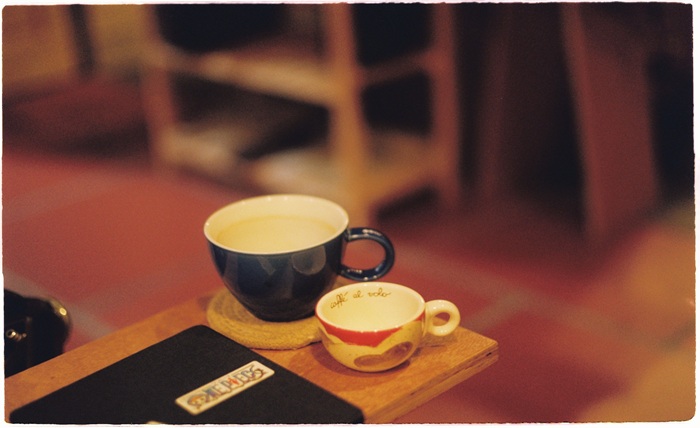
A teacup becomes a tower when the character standing beside it is no taller than its handle. For an original miniature adventure, I would place a small paper astronaut on a kitchen table and let the camera discover the scale of that ordinary object. The proposed film would explore how framing makes a character feel small, rather than repeat measurements of a celebrity or imitate an existing screen hero.
The astronaut would be a simple original design: a rounded helmet, a plain suit, and a small orange backpack. I would prepare a clear reference image beside the cup so their relative sizes are already established. A second image could show the character from the side. The design would stay intentionally uncomplicated, making its silhouette easier to recognize as the camera changes position.
Choosing the object that explains the scale
The cup is useful because viewers already understand its ordinary size. I would place it on a visible saucer and leave part of a spoon nearby, giving the table a familiar context. Without those clues, the scene might look like a normal-sized astronaut beside an abstract building. The goal is for the audience to recognize the domestic setting and then reconsider it from the character’s viewpoint.
I would open close to the astronaut’s boots, with the cup mostly outside the frame. The next view would reveal the curved ceramic wall rising above the helmet. A small camera movement could connect those two levels, but I would avoid a rapid tilt that turns the cup into a distorted shape. The reveal needs to preserve the object while changing the viewer’s understanding of it.
That scale-based scene is a concrete way to explore Seedance 3.0. The AI video model supports text-to-video, image-to-video, and reference generation using combinations of text, images, video, and audio. I would let the reference image establish the astronaut-to-cup relationship, then describe a small upward glance and a restrained camera rise. The story would come from a familiar object becoming unexpectedly imposing.
Keeping the character small through the shot
My first Seedance 3.0 brief would specify the astronaut’s position beside the saucer and keep the cup still. I would ask for one simple action, such as the helmet turning upward. A walking, climbing, and jumping sequence would introduce too many opportunities for the character’s proportions to change. A clear reaction can communicate the discovery without requiring an entire stunt.
I would inspect the helmet relative to the cup handle at several points in the result. If the character becomes larger during the camera move, the central idea breaks. My correction would be to reduce the movement, tighten the reference composition, or choose a shorter section where the relationship remains clear. The exact fictional height matters less than consistent scale within the scene.
The orange backpack would act as a second continuity marker. Its color and position should remain stable as the astronaut turns. If it disappears or becomes a different shape, I would simplify the turn and provide a clearer side reference. I would not add more costume detail to solve that problem. The audience needs to recognize the same little explorer, not inspect a complicated suit.
Changing the viewpoint without changing the world
The next Seedance 3.0 shot would look from the astronaut’s level toward the cup rim. At that height, the curve of the ceramic wall could feel monumental. I would keep a recognizable section of the handle visible so the object still reads as a cup. The lighting would remain ordinary window light, which makes the exaggerated perspective more interesting than a completely fantastical background.
In Seedance 3.0, the low-angle reference would need to show the same cup rather than a similar one from another kitchen. A different handle or glaze could make the edit feel inconsistent even if viewers cannot explain why. I would take the references together where possible, preserving the table, saucer, and direction of light. The camera may change its position; the world should remain coherent.
A brief movement reference could demonstrate the slow rise I want. Its job would be to communicate pace, not supply a different character or setting. I would avoid combining a sweeping aerial motion with a tabletop scene. A small movement is enough to reveal the height difference, and it keeps the miniature feeling close to the viewer.
Using sound to make the table feel enormous
A faint ceramic tap could become a deep, resonant sound from the astronaut’s perspective. I would record the cup carefully and experiment with the sound in editing, keeping the effect playful rather than frightening. A tiny footstep sound could establish the character’s movement, while the room ambience stays soft. The contrast would reinforce scale without requiring extra visual effects.
Seedance 3.0 can include audio in its reference-based workflow, but I would still assemble the final soundtrack around the chosen shots. The cup sound should coincide with a visible or clearly implied event. If it arrives randomly, it may feel like a dramatic effect pasted onto the scene. The edit should explain the astronaut’s reaction through a small chain of cause and response.
Repairing a reveal that becomes confusing
A draft might make the cup bend inward or turn its handle into an archway. That could be attractive in a surreal film, but it would weaken this ordinary-object concept. My next Seedance 3.0 version would hold the cup geometry more closely to the reference and reduce the camera rise. I would also remove unnecessary reflections if they make the rim difficult to read.
If the reveal is still unclear, I would add a short wider shot showing the whole tabletop. The astronaut, cup, saucer, and spoon would appear together before the camera returns to the low view. That establishing image could solve a storytelling problem that no amount of dramatic movement would fix. Viewers need to understand the relationship before they can enjoy its exaggeration.
Ending with a small decision
The final image would show the astronaut turning toward the spoon as though considering it a bridge. I would stop before the crossing, leaving the next part of the adventure to the viewer’s imagination. A short title card could identify the original character and the film as an AI-created miniature concept. I would add all lettering in the editor to keep it crisp and deliberate.
The finished Seedance 3.0 sequence would work if the astronaut stays recognizable and the cup stays ordinary. That combination is what makes the scale surprising. I would watch the edit without sound to check that the reveal is clear, then listen for effects that overwhelm the small action. A tiny character does not need a huge plot; one convincing encounter with an everyday object can create a complete little film.